Dental Implants
The Gold Standard in Tooth Replacement

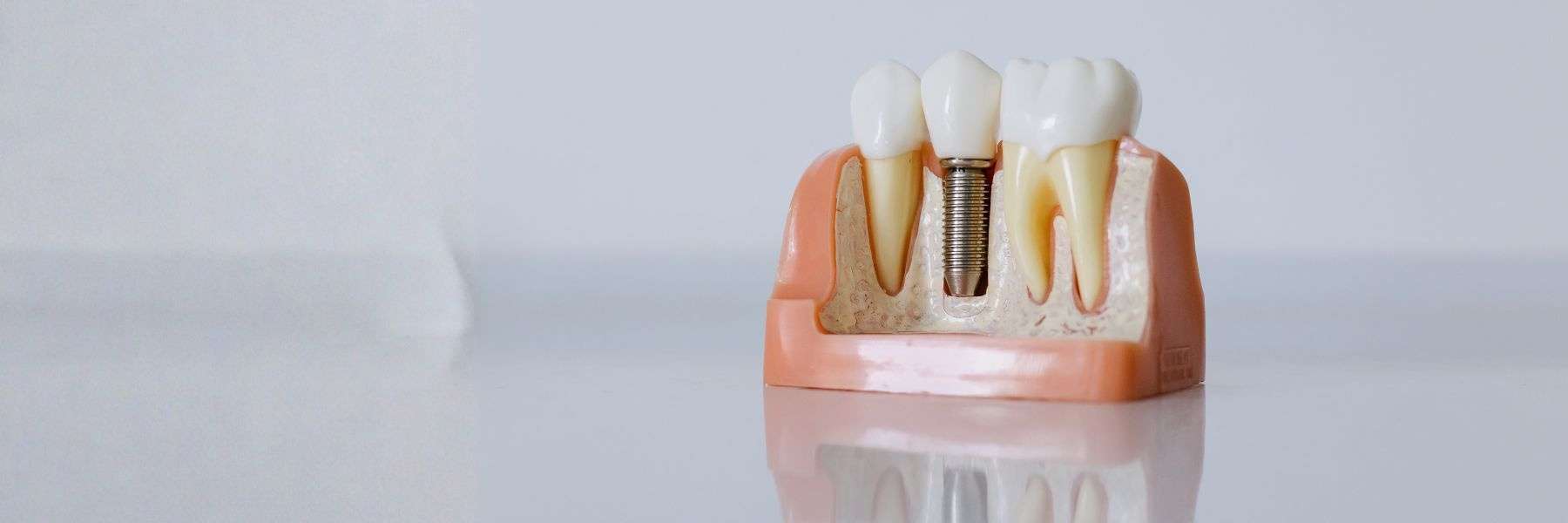
Dental implants replace your tooth and root, restoring function and aesthetics to your smile.

Dental Implants | Dentist

Dental Implants

implants are a long-term solution to tooth loss and are the replacement that dentists most often recommend, with good reason!

Unlike removable dentures or partials, you won’t experience problems with slipping or shifting, and implants don’t require a specialized daily care routine beyond regular brushing and flossing. We do not need to alter existing, healthy teeth with dental implants; we can support a dental bridge with implants. 

Do I Need Dental Implants?

For many people, missing teeth present a mostly cosmetic problem, which is a legitimate concern: Missing teeth carry a stigma, and people with missing teeth may find themselves unfairly judged in many social settings.

Unfortunately, the problem of missing teeth goes beyond aesthetics. Tooth loss puts additional stress on your remaining teeth, leading to damage such as fractures and breakage. You may find it difficult or even painful to enjoy the fresh, healthy foods you need for proper nutrition and nourishment.

One or more missing teeth can eventually lead to significant bone loss in your jaw as the bone atrophies from lack of use. Over time, jawbone loss leads to visible changes in your face and causes a prematurely aged appearance.

Dental implants will stop bone loss in its tracks, which even dentures and partials cannot do.

Frequently Asked Questions

Dental implants are intended to blend in seamlessly with your natural teeth.

One of the advantages of this is that you can brush them and floss them the same as you would with your regular teeth. While implants never get cavities (and never need root canals!), you still want to continue brushing and flossing to keep your natural teeth and your gums healthy.

Am I a Good Dental Implant Candidate?

While most healthy adults are eligible for tooth implants, some health conditions can affect placement results.

When you visit our office to discuss dental implants, we will ask several questions about your health history. These questions help us determine whether dental implants are the right option for you. Don’t worry—even if you have a health concern, we can likely work with you. We need to know about any conditions and take the necessary precautions to account for them.

How Are Dental Implants Placed?

Before beginning the implant process, we perform a full examination, including x-rays. Because the implant is attached directly to your jaw, we need to know the condition of your bone. Our dentist may recommend bone grafts and other procedures to build up your jawbone if necessary.

We then place the titanium implant post in your jawbone. When you have healed sufficiently, we may place a temporary crown over the implant while waiting for your permanent crown to return from the dental lab.

When your final crown returns from the dental lab, you will return to our office so we can place it on your dental implant. The final step is to check the crown for fit and appearance, and your implant will be complete.

For more information about tooth implants or to schedule an appointment, please call our dental practice today.

  • Dr. Connie Onik

    Dr. Connie Onik has been practicing dentistry since 2003, bringing over two decades of experience and genuine passion for patient care to her hometown of Frankfort. After previously owning a dental practice further from home, Dr. Onik purchased Onik Family Dental in 2021, allowing her to serve her community while staying close to what matters most, her family and the place she calls home.

    Dr. Onik earned her Bachelor of Arts from Washington University in St. Louis in 1999, initially studying biomedical engineering. However, she soon realized she needed more personal ...

    Read More

Dental Implants Technology

Panoramic X-Ray

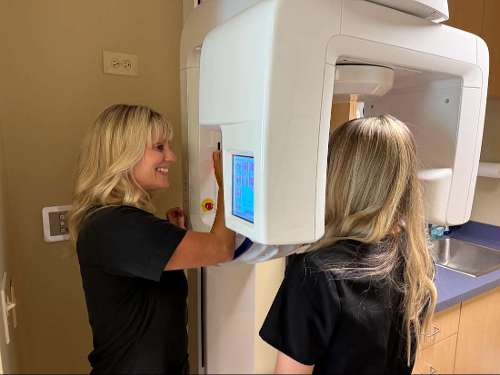
Panoramic x-rays are specialized dental imaging systems that capture a comprehensive view of the entire oral cavity in a single exposure. Unlike traditional intraoral x-rays, the panoramic machine rotates around the patient's head in a 180-degree arc, producing a flattened, two-dimensional representation of the curved jaw structure.

This technology uses a narrow x-ray beam and continuous movement of the film or digital sensor to produce a complete image of all teeth, the upper and lower jaws, the temporomandibular joints, and the sinuses. The process takes approximately 12-20 seconds and is particularly valuable for treatment planning, evaluating wisdom teeth, detecting jaw abnormalities, and efficiently assessing overall dental health.